

Browse Jobs in Japan
Find your next design role at companies that value creative talent
Showing 26 jobs

Product Designer
🇯🇵 Japan
Hello Clever 🇯🇵 Japan
You will lead the design of the merchant journey for the Japanese market while contributing to the core global platform's onboarding and dashboard experiences. This involves conducting user research, ensuring regulatory compliance, and translating local market needs into scalable product features.

Senior Design Manager Mechanical - Data Center Design シニアデザインマネージャー機械
🇯🇵 Japan
Specialized Group 🇯🇵 Japan
Lead the mechanical design and implementation of critical data center infrastructure projects while ensuring compliance with regional regulations and industry standards. Coordinate with project managers and engineers to integrate HVAC, electrical, and plumbing systems and oversee quality assurance processes.

Design Manager
🇯🇵 Japan
Airtrunk 🇯🇵 Japan
Lead the design and delivery of multi-MW hyperscale data centre solutions from inception to completion. Interface with cloud customers to develop master planning, engineering solutions, and technical documentation for new developments.

Design Manager
🇯🇵 Minato, Tokyo, Japan
Airtrunk 🇯🇵 Minato, Tokyo, Japan
Lead project design teams from inception to delivery for hyperscale data center solutions while interfacing with cloud and enterprise customers. Develop master planning, engineering solutions, and technical documentation while overseeing equipment procurement and site selection processes.
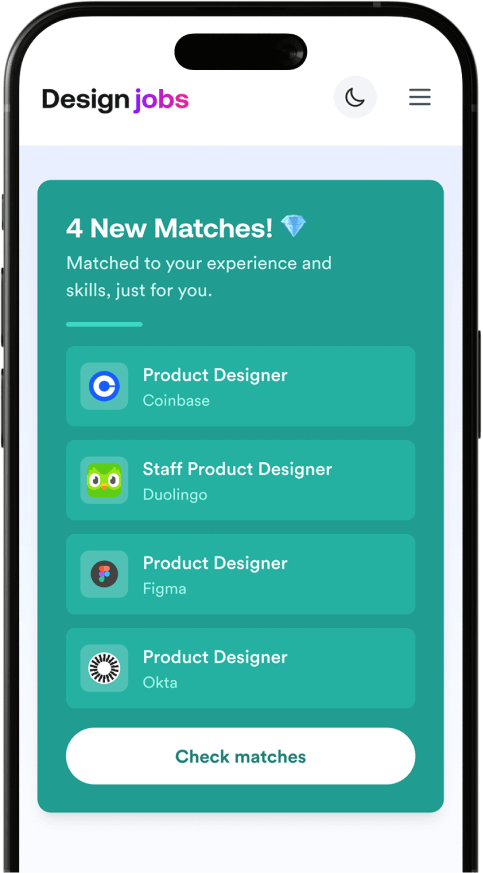
Stop scrolling. Get matched with roles that fit you. 💎
Upload your resume and let the right roles find you

Solutions Design Manager
🇯🇵 Japan
Dhl Supply Chain 🇯🇵 Japan
Lead the solution design workstream for new business pursuits and renewals by developing warehousing and transport solutions. Collaborate with operations and business development teams to implement facility designs, optimize processes, and improve financial outcomes.

Product Designer
🇯🇵 Usa, Oita Prefecture, Japan
Egotechworld 🇯🇵 Usa, Oita Prefecture, Japan
The Product Designer creates intuitive digital experiences by translating business and user needs into product concepts, wireframes, and high-fidelity interfaces. They collaborate with cross-functional teams to iterate on designs based on research and maintain visual consistency through design systems.

Product Designer - UX Strategist (Senior/Lead)
🇯🇵 Japan
Gotymex 🇯🇵 Japan
Lead the design of simple, scalable, and easy-to-navigate features focusing on UX journeys and strategy. Collaborate with a multinational design team to deliver high-quality fintech products from concept to final execution.
Product Designer - UX Strategist (Senior/Lead)
🇯🇵 Tōkyō, 1, Marunouchi 1, Chiyoda, Tokyo 100-0005, Japan
Gotymex 🇯🇵 Tōkyō, 1, Marunouchi 1, Chiyoda, Tokyo 100-0005, Japan
The Product Designer will develop scalable UX journeys and strategies while collaborating with a multinational team to deliver high-quality digital products. You will be responsible for designing features that are simple and easy to navigate while applying critical thinking to the broader product ecosystem.

Digital Bank Product Designer (JP・EN)
🇯🇵 Japan
ビルドプラス 🇯🇵 Japan
Lead end-to-end UX/UI design for a digital bank's consumer app, web services, and corporate platforms. Responsibilities include developing design concepts, conducting user research, and maintaining the design system to optimize the user experience.

Field and Design Engineer, Field and Design Engineering, Field and Design Engineering
🇯🇵 Tōkyō, 1, Marunouchi 1, Chiyoda, Tokyo 100-0005, Japan
Amazon 🇯🇵 Tōkyō, 1, Marunouchi 1, Chiyoda, Tokyo 100-0005, Japan
The Field and Design Engineer will lead the physical launch and modification of logistics buildings, including site layout design and construction project management. They are responsible for coordinating with stakeholders to ensure project milestones, budgets, and quality standards are met.

Head of Design – Japan Data Center Development & Delivery
🇯🇵 Japan
S-ai 🇯🇵 Japan
Lead the technical direction and engineering lifecycle for high-density AI data centers in Japan, establishing the Basis of Design for hyperscale clusters. Manage local A&E partners, ensure regulatory compliance, and build a multidisciplinary engineering team in Tokyo.

Head of Design / Principal Designer
🇯🇵 Tokyo, Japan
Boostdraft 🇯🇵 Tokyo, Japan
You will lead the user research practice and define the company's design philosophy to drive product direction through rapid, prototype-driven testing. Additionally, you will build and scale a design system while coaching a team of product designers to adopt research-led, iterative workflows.

Graphic Designer (Elysian Heights)
🇯🇵 Japan
Feel Invest Group 🇯🇵 Japan
Create high-end visuals, brochures, and investor decks to establish the brand identity for a luxury villa project in Lombok. Collaborate with marketing and architectural teams to ensure visual consistency across local and international campaigns.

Principal Design Manager
🇯🇵 Tōkyō, 1, Marunouchi 1, Chiyoda, Tokyo 100-0005, Japan
Microsoft 🇯🇵 Tōkyō, 1, Marunouchi 1, Chiyoda, Tokyo 100-0005, Japan
The Design Manager will oversee the engineering scope, schedule, and budget for datacenter projects across the APAC region, managing internal and external resources. They are responsible for facilitating the delivery of datacenter infrastructure from site due diligence through design, construction, and operational turnover.

Japanese Graphic Designer
🇯🇵 Chiyoda, Tokyo, Japan
Healthminds Consulting Private Limited 🇯🇵 Chiyoda, Tokyo, Japan
The designer will create diverse digital and print assets such as brochures, websites, and e-learning modules to support pharmaceutical industry clients. They are responsible for executing creative concepts while ensuring brand consistency across all omnichannel deliverables.
How design hiring is changing in 2026
Design hiring has changed. Craft alone is no longer enough. Top teams now expect designers to ship live code, work alongside AI tools, and prototype fast.
Whether you are a Product Designer shipping features or a Graphic Designer guiding AI-generated visuals, the strongest roles reward deep craft and tool fluency together.
DesignJobs lists roles from companies leading the shift, including OpenAI, Anthropic, Vercel, and Linear. Spend less time searching, more time on the work.
Across all roles, the biggest differentiator is technical literacy. For Product Designers, this means "vibe coding" and functional prototyping. For Brand Designers, it's managing generative identity systems. The ability to leverage AI to move faster while maintaining human-centered quality is what separates top candidates today.
The design world is increasingly distributed, though many AI leaders now favor hybrid hubs. While companies like Figma, Notion, and Anthropic often prioritize collaboration in SF or London, we also feature truly remote-first teams like PostHog and Supabase. Use our "Remote Only" toggle on the main jobs page to filter for positions that allow you to work from anywhere.
While not a strict requirement for every role, it is becoming the standard for Design Engineering and high-growth Product roles. Being able to express design intent through code allows you to iterate at the speed of thought. We recommend designers bridge the gap using tools like Cursor, v0, and Replit to stay competitive.
Our AI Job Matcher analyzes your specific skill set, portfolio style, and career goals to surface roles you might miss with a traditional keyword search. It is designed to understand the nuance of your "design vibe" and match it with the culture of hiring teams at companies like Google and Perplexity.
Absolutely. In 2026, we are moving beyond "chatbots" to autonomous agents. Agentic UX involves designing systems that take action on behalf of the user. Your portfolio should demonstrate how you handle agentic trust, error states in autonomous flows, and "human-in-the-loop" verification points.
Yes! We feature a wide range of entry-level and junior design jobs across all categories. While the market is competitive, companies are actively seeking early-career designers who demonstrate technical agency and a willingness to master AI-assisted workflows.
We prioritize listings with transparent salary data. In 2026, compensation for roles like Design Engineering has seen significant growth due to the scarcity of hybrid "design-dev" talent. For deeper insights, check out our 2026 Design Salary Guide.
In 2026, the term Product Orchestrator refers to senior designers who direct AI-integrated systems rather than handcrafting every screen. While a Senior Product Designer focuses on the craft and technical agency, an Orchestrator focuses on cross-functional strategy, data logic, and aligning generative outcomes with business ROI.
Yes. High-growth companies like OpenAI look for portfolios that prove you can design for safety. This means showing how users can edit, override, or approve AI-generated outputs, ensuring the human remains the final decision-maker in the workflow.